

1.4: Problem Solving Strategies Part 1
- Page ID
- 180389
\( \newcommand{\vecs}[1]{\overset { \scriptstyle \rightharpoonup} {\mathbf{#1}} } \)
\( \newcommand{\vecd}[1]{\overset{-\!-\!\rightharpoonup}{\vphantom{a}\smash {#1}}} \)
\( \newcommand{\dsum}{\displaystyle\sum\limits} \)
\( \newcommand{\dint}{\displaystyle\int\limits} \)
\( \newcommand{\dlim}{\displaystyle\lim\limits} \)
\( \newcommand{\id}{\mathrm{id}}\) \( \newcommand{\Span}{\mathrm{span}}\)
( \newcommand{\kernel}{\mathrm{null}\,}\) \( \newcommand{\range}{\mathrm{range}\,}\)
\( \newcommand{\RealPart}{\mathrm{Re}}\) \( \newcommand{\ImaginaryPart}{\mathrm{Im}}\)
\( \newcommand{\Argument}{\mathrm{Arg}}\) \( \newcommand{\norm}[1]{\| #1 \|}\)
\( \newcommand{\inner}[2]{\langle #1, #2 \rangle}\)
\( \newcommand{\Span}{\mathrm{span}}\)
\( \newcommand{\id}{\mathrm{id}}\)
\( \newcommand{\Span}{\mathrm{span}}\)
\( \newcommand{\kernel}{\mathrm{null}\,}\)
\( \newcommand{\range}{\mathrm{range}\,}\)
\( \newcommand{\RealPart}{\mathrm{Re}}\)
\( \newcommand{\ImaginaryPart}{\mathrm{Im}}\)
\( \newcommand{\Argument}{\mathrm{Arg}}\)
\( \newcommand{\norm}[1]{\| #1 \|}\)
\( \newcommand{\inner}[2]{\langle #1, #2 \rangle}\)
\( \newcommand{\Span}{\mathrm{span}}\) \( \newcommand{\AA}{\unicode[.8,0]{x212B}}\)
\( \newcommand{\vectorA}[1]{\vec{#1}} % arrow\)
\( \newcommand{\vectorAt}[1]{\vec{\text{#1}}} % arrow\)
\( \newcommand{\vectorB}[1]{\overset { \scriptstyle \rightharpoonup} {\mathbf{#1}} } \)
\( \newcommand{\vectorC}[1]{\textbf{#1}} \)
\( \newcommand{\vectorD}[1]{\overrightarrow{#1}} \)
\( \newcommand{\vectorDt}[1]{\overrightarrow{\text{#1}}} \)
\( \newcommand{\vectE}[1]{\overset{-\!-\!\rightharpoonup}{\vphantom{a}\smash{\mathbf {#1}}}} \)
\( \newcommand{\vecs}[1]{\overset { \scriptstyle \rightharpoonup} {\mathbf{#1}} } \)
\(\newcommand{\longvect}{\overrightarrow}\)
\( \newcommand{\vecd}[1]{\overset{-\!-\!\rightharpoonup}{\vphantom{a}\smash {#1}}} \)
\(\newcommand{\avec}{\mathbf a}\) \(\newcommand{\bvec}{\mathbf b}\) \(\newcommand{\cvec}{\mathbf c}\) \(\newcommand{\dvec}{\mathbf d}\) \(\newcommand{\dtil}{\widetilde{\mathbf d}}\) \(\newcommand{\evec}{\mathbf e}\) \(\newcommand{\fvec}{\mathbf f}\) \(\newcommand{\nvec}{\mathbf n}\) \(\newcommand{\pvec}{\mathbf p}\) \(\newcommand{\qvec}{\mathbf q}\) \(\newcommand{\svec}{\mathbf s}\) \(\newcommand{\tvec}{\mathbf t}\) \(\newcommand{\uvec}{\mathbf u}\) \(\newcommand{\vvec}{\mathbf v}\) \(\newcommand{\wvec}{\mathbf w}\) \(\newcommand{\xvec}{\mathbf x}\) \(\newcommand{\yvec}{\mathbf y}\) \(\newcommand{\zvec}{\mathbf z}\) \(\newcommand{\rvec}{\mathbf r}\) \(\newcommand{\mvec}{\mathbf m}\) \(\newcommand{\zerovec}{\mathbf 0}\) \(\newcommand{\onevec}{\mathbf 1}\) \(\newcommand{\real}{\mathbb R}\) \(\newcommand{\twovec}[2]{\left[\begin{array}{r}#1 \\ #2 \end{array}\right]}\) \(\newcommand{\ctwovec}[2]{\left[\begin{array}{c}#1 \\ #2 \end{array}\right]}\) \(\newcommand{\threevec}[3]{\left[\begin{array}{r}#1 \\ #2 \\ #3 \end{array}\right]}\) \(\newcommand{\cthreevec}[3]{\left[\begin{array}{c}#1 \\ #2 \\ #3 \end{array}\right]}\) \(\newcommand{\fourvec}[4]{\left[\begin{array}{r}#1 \\ #2 \\ #3 \\ #4 \end{array}\right]}\) \(\newcommand{\cfourvec}[4]{\left[\begin{array}{c}#1 \\ #2 \\ #3 \\ #4 \end{array}\right]}\) \(\newcommand{\fivevec}[5]{\left[\begin{array}{r}#1 \\ #2 \\ #3 \\ #4 \\ #5 \\ \end{array}\right]}\) \(\newcommand{\cfivevec}[5]{\left[\begin{array}{c}#1 \\ #2 \\ #3 \\ #4 \\ #5 \\ \end{array}\right]}\) \(\newcommand{\mattwo}[4]{\left[\begin{array}{rr}#1 \amp #2 \\ #3 \amp #4 \\ \end{array}\right]}\) \(\newcommand{\laspan}[1]{\text{Span}\{#1\}}\) \(\newcommand{\bcal}{\cal B}\) \(\newcommand{\ccal}{\cal C}\) \(\newcommand{\scal}{\cal S}\) \(\newcommand{\wcal}{\cal W}\) \(\newcommand{\ecal}{\cal E}\) \(\newcommand{\coords}[2]{\left\{#1\right\}_{#2}}\) \(\newcommand{\gray}[1]{\color{gray}{#1}}\) \(\newcommand{\lgray}[1]{\color{lightgray}{#1}}\) \(\newcommand{\rank}{\operatorname{rank}}\) \(\newcommand{\row}{\text{Row}}\) \(\newcommand{\col}{\text{Col}}\) \(\renewcommand{\row}{\text{Row}}\) \(\newcommand{\nul}{\text{Nul}}\) \(\newcommand{\var}{\text{Var}}\) \(\newcommand{\corr}{\text{corr}}\) \(\newcommand{\len}[1]{\left|#1\right|}\) \(\newcommand{\bbar}{\overline{\bvec}}\) \(\newcommand{\bhat}{\widehat{\bvec}}\) \(\newcommand{\bperp}{\bvec^\perp}\) \(\newcommand{\xhat}{\widehat{\xvec}}\) \(\newcommand{\vhat}{\widehat{\vvec}}\) \(\newcommand{\uhat}{\widehat{\uvec}}\) \(\newcommand{\what}{\widehat{\wvec}}\) \(\newcommand{\Sighat}{\widehat{\Sigma}}\) \(\newcommand{\lt}{<}\) \(\newcommand{\gt}{>}\) \(\newcommand{\amp}{&}\) \(\definecolor{fillinmathshade}{gray}{0.9}\)Think back to the ABC Problem. What did you do to solve it? Even if you did not figure it out completely by yourself, you probably worked towards a solution and figured out some things that did not work.
Unlike exercises, there is never a simple recipe for solving a problem. You can get better and better at solving problems, both by building up your background knowledge and by simply practicing. As you solve more problems (and learn how other people solved them), you learn strategies and techniques that can be useful. But no single strategy works every time.
George Pólya was a great champion in the field of teaching effective problem solving skills. He was born in Hungary in 1887, received his Ph.D. at the University of Budapest, and was a professor at Stanford University (among other universities). He wrote many mathematical papers along with three books, most famously, “How to Solve it.” Pólya died at the age 98 in 1985.[1]
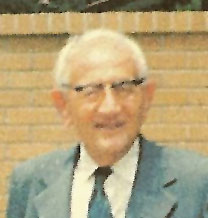
George Pólya, circa 1973
- Image of Pólya by Thane Plambeck from Palo Alto, California (Flickr) [CC BY 2.0 (http://creativecommons.org/licenses/by/2.0)], via Wikimedia Commons ↵
In 1945, Pólya published the short book How to Solve It, which gave a four-step method for solving mathematical problems:
- First, you have to understand the problem.
- After understanding, then devise a plan.
- Carry out the plan.
- Look back on your work. How could it be better?
This is all well and good, but how do you actually do these steps?!?! Steps 1. and 2. are particularly mysterious! How do you “make a plan?” That is where you need some tools in your toolbox, and some experience to draw upon.
Much has been written since 1945 to explain these steps in more detail, but the truth is that they are more art than science. This is where math becomes a creative endeavor (and where it becomes so much fun). We will articulate some useful problem solving strategies, but no such list will ever be complete. This is really just a start to help you on your way. The best way to become a skilled problem solver is to learn the background material well, and then to solve a lot of problems!
In our course, you will encounter various strategies to support the "devise a plan" step in problem solving. These include:
- Guess and Test
- Draw a Picture or Diagram
- Use a Variable
- Look for a Pattern
- Make a List or Table
- Solve a Simpler Problem
By practicing these techniques, you will gain insight into how children approach mathematics and learn strategies to guide them effectively. In this class, we aim to develop productive forms of mathematical thinking that will serve you and your future students in many facets of life. Through this process, you will not only deepen your own understanding of mathematics but also learn how to cultivate a problem-solving mindset in your students, empowering them to see mathematics as a tool for understanding and shaping the world.
- Polya's Full List of Problem Solving Strategies
-
The following list outlines various strategies, or heuristics, that can be used to approach and solve problems effectively. These strategies help build logical thinking, creativity, and confidence in tackling complex challenges.
Guess and Test: Make an initial guess, test it, and refine the guess until a solution is found. Useful when there are limited possible answers.
Draw a Picture or Diagram: Creating a visual representation of the problem can clarify relationships and make the problem easier to solve.
Use a Variable: Representing unknown quantities with variables can help in setting up and solving equations.
Look for a Pattern: Identifying patterns in numbers or data can lead to predictions and solutions.
Make a List or Table: Organizing information systematically can reveal relationships and simplify problem-solving.
Solve a Simpler Problem: Breaking down a complex problem into a smaller, more manageable version can provide insights into the larger problem.
Work Backwards: Start with the desired outcome and reverse the steps to find the starting point.
Use Direct Reasoning: Apply logical steps in a straightforward manner to reach a conclusion.
Use Indirect Reasoning: Consider what cannot be true to eliminate possibilities and find the correct answer.
Use Properties of Numbers: Apply knowledge of prime numbers, factors, odd/even properties, etc., to simplify calculations.
Solve an Equivalent Problem: Reframe the problem in a different but equivalent way that may be easier to solve.
Use Cases: Break the problem into distinct scenarios and solve each separately.
Solve an Equation: Use algebraic methods to represent and solve the problem mathematically.
Look for a Formula: Utilize established formulas for area, volume, or other measurable attributes.
Do a Simulation: Model the problem using a controlled test or experiment.
Use a Model: Employ physical objects or manipulatives to represent the problem, particularly in geometry.
Use Dimensional Analysis: Analyze and convert units to ensure correct calculations.
Identify Subgoals: Break a complex problem into smaller steps to solve sequentially.
Use Coordinates: Represent problems graphically using a coordinate system.
Use Symmetry: Recognize and apply symmetry to simplify problem-solving.
Problem-Solving Strategy 1: Guess and Test
The "guess and test" strategy is about starting with a guess and seeing how close you are to the right answer. If your guess isn’t correct, you use what you learned to make a better guess and try again. It’s like trial and error, but each try gives you clues to help you get closer to the solution.
This strategy works well when:
- There aren’t too many possible answers to try.
- You want to understand the problem better by testing different possibilities.
- You can test possible answers in an organized way.
People often use guess and test when they don’t know a faster way to solve the problem or don’t have the tools to solve it more efficiently. It’s a simple method, but it can help you get to the answer! (Finan, 2006).
Last week, Alex borrowed money from several of his friends. He finally got paid at work, so he brought cash to school to pay back his debts. First he saw Brianna, and he gave her 1/4 of the money he had brought to school. Then Alex saw Chris and gave him 1/3 of what he had left after paying Brianna. Finally, Alex saw David and gave him 1/2 of what he had remaining. Who got the most money from Alex?
- Answer
-
Let's use a guess and test approach.
Step 1: Make a Guess
Suppose Alex initially brought $120 to school.
He gives 1/4 to Brianna: 120×1/4=30
Remaining money: $120 - 30 = 90
He gives 1/3 of the remaining money to Chris: 90×1/3=30
Remaining money: $90 - 30 = 60
He gives 1/2 of the remaining money to David: 60×1/2=30
Each person received $30, meaning they all got the same amount.
Step 2: Adjust the Guess
Let's try a different initial amount, say $240.
Brianna gets: 240×1/4=60
Remaining: $240 - 60 = 180
Chris gets: 180×1/3=60
Remaining: $180 - 60 = 120
David gets: 120×1/2=60
Each person received $60, meaning they all got the same amount.
Step 3: Generalizing
From our tests, it appears that the fractions ensure each person receives the same amount, regardless of the initial amount.
Final Answer: No one got the most money; Brianna, Chris, and David all received the same amount.
Problem Solving Strategy 2 (Draw a Picture or Diagram).
The "draw a picture" strategy helps you solve problems by creating a visual representation. It’s especially useful for understanding and solving certain types of problems. Here’s when to use it:
This method works best when:
- Physical Situations: If the problem involves objects, locations, or movement, drawing can help you see how they relate to each other.
- Geometric Problems: For questions about shapes, area, perimeter, or volume, a drawing can clarify the problem.
- Visual Patterns: If the problem can be represented visually, drawing might reveal patterns or relationships.
- Need for Understanding: If the problem is confusing, drawing a picture can organize your thoughts and make the problem clearer
Let's try to solve the previous example using the "Draw a Picture or Diagram" method. Draw a square to represent all of Alex’s money. Then shade 1/4 of the square — that’s what he gave away to Brianna. How can the picture help you finish the problem? After you have worked on the problem yourself using this strategy (or if you are completely stuck), you can watch someone else’s solution.
There are 5 people in a room. Each person exchanges exactly one fist bump with every other person. How many total fist bumps take place?
- Answer
-
To calculate this, you can THINK of it as the first person fist bumps 4 others, then the second person fist bumps 3 others (as they already fist bumped the first person), and so on. This adds up to 4 + 3 + 2 + 1 = 10 fist bumps.
OR (we can draw it out)
Each circle represents a person and each line segment represents one fist bump. This forms a complete network with ten total connections, or 10 total fist bumps.

Problem Solving Strategy 3 (Use a Variable)
A variable is a powerful tool to represent unknown values or relationships in math problems. Sometimes, a problem asks you to figure out a number. You can use a variable (like x or n) to stand for the unknown number. Then, use the information in the problem to create an equation that you can solve to find the number. (FIRST)
This method works best when:
- The problem can be written as an equation.
- There’s an unknown number connected to numbers you already know.
- You need to create a formula or general rule.
A local community center held a charity gaming event where two types of tickets were sold: a child ticket for $2 and an adult ticket for $5. In total, 600 tickets were sold, raising $1,500. How many child tickets and how many adult tickets were sold?
- Answer
-
Let's use the following variables to represent the number of each ticket type:
x: Number of child tickets sold (cost $2 each) , y: Number of adult tickets sold (cost $5 each)
Step 1: Set up the equations.
Total tickets equation:
x+y=600Total revenue equation:
2x+5y=1500Step 2: Solve the system of equations.
From the first equation, x+y=600, express x in terms of y, x=600−y.
Substitute x=600−y into the second equation 2x+5y=1500
2(600−y)+5y=1500Simplify and solve for y:
1200−2y+5y=15003y=300
y=100.
Substitute y=100 back into x=600−y to find x:
x=600−100=500
Note: Keep in mind that many problems can be solved using different strategies. Just because 1 strategy seems to work for you, another strategy may work just as well or come to mind more quickly for someone else. This means you should be open to hearing what others think, how they approach a problem, and understand that there may be more than one away to find a solution. As a future teacher you want to encourage your students to solve problems in multiple ways and not give up if the first method does not result in a solution, but that they will have learned something in their first attempt.
Analyze each problem scenario and decide which problem solving strategy you would first attempt to use to solve each problem. Do this individually first before discussing this with your peers.
|
Scenario 1: Lulu the Clown drops a super ball from the top of a building. She releases the ball exactly 64 feet from the ground. When the ball bounces on the ground it rebounds to a height that is half of its starting height. If the ball is allowed to bounce eight times, how high will it rebound after the eighth bounce? |
Scenario 2: There was a box of cookies on the table. Maura was hungry because she hadn't had breakfast, so she ate half the cookies. Then Mario came along and noticed the cookies. He thought they looked good, and had not packed lunch, so he took two-thirds of what was left in the box. Suzie came by and decided to take three-fourths of the remaining cookies with her to her next class. Then Ariel came dashing up and took one cookie to munch on. When Kristen looked at the cookie box, she saw that there was just one cookie left. "How many cookies were there in the box to begin with?" she asked Maura. |
Scenario 3: A number leaves a remainder of 2 when divided by 3 and a remainder of 1 when divided by 4. What is the smallest such number? |