

6.1: Poisson's Formula
- Page ID
- 2156

\( \newcommand{\vecs}[1]{\overset { \scriptstyle \rightharpoonup} {\mathbf{#1}} } \)
\( \newcommand{\vecd}[1]{\overset{-\!-\!\rightharpoonup}{\vphantom{a}\smash {#1}}} \)
\( \newcommand{\dsum}{\displaystyle\sum\limits} \)
\( \newcommand{\dint}{\displaystyle\int\limits} \)
\( \newcommand{\dlim}{\displaystyle\lim\limits} \)
\( \newcommand{\id}{\mathrm{id}}\) \( \newcommand{\Span}{\mathrm{span}}\)
( \newcommand{\kernel}{\mathrm{null}\,}\) \( \newcommand{\range}{\mathrm{range}\,}\)
\( \newcommand{\RealPart}{\mathrm{Re}}\) \( \newcommand{\ImaginaryPart}{\mathrm{Im}}\)
\( \newcommand{\Argument}{\mathrm{Arg}}\) \( \newcommand{\norm}[1]{\| #1 \|}\)
\( \newcommand{\inner}[2]{\langle #1, #2 \rangle}\)
\( \newcommand{\Span}{\mathrm{span}}\)
\( \newcommand{\id}{\mathrm{id}}\)
\( \newcommand{\Span}{\mathrm{span}}\)
\( \newcommand{\kernel}{\mathrm{null}\,}\)
\( \newcommand{\range}{\mathrm{range}\,}\)
\( \newcommand{\RealPart}{\mathrm{Re}}\)
\( \newcommand{\ImaginaryPart}{\mathrm{Im}}\)
\( \newcommand{\Argument}{\mathrm{Arg}}\)
\( \newcommand{\norm}[1]{\| #1 \|}\)
\( \newcommand{\inner}[2]{\langle #1, #2 \rangle}\)
\( \newcommand{\Span}{\mathrm{span}}\) \( \newcommand{\AA}{\unicode[.8,0]{x212B}}\)
\( \newcommand{\vectorA}[1]{\vec{#1}} % arrow\)
\( \newcommand{\vectorAt}[1]{\vec{\text{#1}}} % arrow\)
\( \newcommand{\vectorB}[1]{\overset { \scriptstyle \rightharpoonup} {\mathbf{#1}} } \)
\( \newcommand{\vectorC}[1]{\textbf{#1}} \)
\( \newcommand{\vectorD}[1]{\overrightarrow{#1}} \)
\( \newcommand{\vectorDt}[1]{\overrightarrow{\text{#1}}} \)
\( \newcommand{\vectE}[1]{\overset{-\!-\!\rightharpoonup}{\vphantom{a}\smash{\mathbf {#1}}}} \)
\( \newcommand{\vecs}[1]{\overset { \scriptstyle \rightharpoonup} {\mathbf{#1}} } \)
\(\newcommand{\longvect}{\overrightarrow}\)
\( \newcommand{\vecd}[1]{\overset{-\!-\!\rightharpoonup}{\vphantom{a}\smash {#1}}} \)
\(\newcommand{\avec}{\mathbf a}\) \(\newcommand{\bvec}{\mathbf b}\) \(\newcommand{\cvec}{\mathbf c}\) \(\newcommand{\dvec}{\mathbf d}\) \(\newcommand{\dtil}{\widetilde{\mathbf d}}\) \(\newcommand{\evec}{\mathbf e}\) \(\newcommand{\fvec}{\mathbf f}\) \(\newcommand{\nvec}{\mathbf n}\) \(\newcommand{\pvec}{\mathbf p}\) \(\newcommand{\qvec}{\mathbf q}\) \(\newcommand{\svec}{\mathbf s}\) \(\newcommand{\tvec}{\mathbf t}\) \(\newcommand{\uvec}{\mathbf u}\) \(\newcommand{\vvec}{\mathbf v}\) \(\newcommand{\wvec}{\mathbf w}\) \(\newcommand{\xvec}{\mathbf x}\) \(\newcommand{\yvec}{\mathbf y}\) \(\newcommand{\zvec}{\mathbf z}\) \(\newcommand{\rvec}{\mathbf r}\) \(\newcommand{\mvec}{\mathbf m}\) \(\newcommand{\zerovec}{\mathbf 0}\) \(\newcommand{\onevec}{\mathbf 1}\) \(\newcommand{\real}{\mathbb R}\) \(\newcommand{\twovec}[2]{\left[\begin{array}{r}#1 \\ #2 \end{array}\right]}\) \(\newcommand{\ctwovec}[2]{\left[\begin{array}{c}#1 \\ #2 \end{array}\right]}\) \(\newcommand{\threevec}[3]{\left[\begin{array}{r}#1 \\ #2 \\ #3 \end{array}\right]}\) \(\newcommand{\cthreevec}[3]{\left[\begin{array}{c}#1 \\ #2 \\ #3 \end{array}\right]}\) \(\newcommand{\fourvec}[4]{\left[\begin{array}{r}#1 \\ #2 \\ #3 \\ #4 \end{array}\right]}\) \(\newcommand{\cfourvec}[4]{\left[\begin{array}{c}#1 \\ #2 \\ #3 \\ #4 \end{array}\right]}\) \(\newcommand{\fivevec}[5]{\left[\begin{array}{r}#1 \\ #2 \\ #3 \\ #4 \\ #5 \\ \end{array}\right]}\) \(\newcommand{\cfivevec}[5]{\left[\begin{array}{c}#1 \\ #2 \\ #3 \\ #4 \\ #5 \\ \end{array}\right]}\) \(\newcommand{\mattwo}[4]{\left[\begin{array}{rr}#1 \amp #2 \\ #3 \amp #4 \\ \end{array}\right]}\) \(\newcommand{\laspan}[1]{\text{Span}\{#1\}}\) \(\newcommand{\bcal}{\cal B}\) \(\newcommand{\ccal}{\cal C}\) \(\newcommand{\scal}{\cal S}\) \(\newcommand{\wcal}{\cal W}\) \(\newcommand{\ecal}{\cal E}\) \(\newcommand{\coords}[2]{\left\{#1\right\}_{#2}}\) \(\newcommand{\gray}[1]{\color{gray}{#1}}\) \(\newcommand{\lgray}[1]{\color{lightgray}{#1}}\) \(\newcommand{\rank}{\operatorname{rank}}\) \(\newcommand{\row}{\text{Row}}\) \(\newcommand{\col}{\text{Col}}\) \(\renewcommand{\row}{\text{Row}}\) \(\newcommand{\nul}{\text{Nul}}\) \(\newcommand{\var}{\text{Var}}\) \(\newcommand{\corr}{\text{corr}}\) \(\newcommand{\len}[1]{\left|#1\right|}\) \(\newcommand{\bbar}{\overline{\bvec}}\) \(\newcommand{\bhat}{\widehat{\bvec}}\) \(\newcommand{\bperp}{\bvec^\perp}\) \(\newcommand{\xhat}{\widehat{\xvec}}\) \(\newcommand{\vhat}{\widehat{\vvec}}\) \(\newcommand{\uhat}{\widehat{\uvec}}\) \(\newcommand{\what}{\widehat{\wvec}}\) \(\newcommand{\Sighat}{\widehat{\Sigma}}\) \(\newcommand{\lt}{<}\) \(\newcommand{\gt}{>}\) \(\newcommand{\amp}{&}\) \(\definecolor{fillinmathshade}{gray}{0.9}\)Assume \(u\) is a solution of (6.2), then, since Fourier transform is a linear mapping,
\[\widehat{u_t-\triangle u}=\hat{0}.\]
From properties of the Fourier transform, see Proposition 5.1, we have
\[\widehat{\triangle u}=\sum_{k=1}^n\widehat{\frac{\partial^2 u}{\partial x_k^2}}=\sum_{k=1}^n i^2\xi^2_k\widehat{u}(\xi),\]
provided the transforms exist. Thus we arrive at the ordinary differential equation for the Fourier transform of \(u\)
\[\frac{d\widehat{u}}{dt}+|\xi|^2\widehat{u}=0,\]
where \(\xi\) is considered as a parameter. The solution is
\[\widehat{u}(\xi,t)=\widehat{\phi}(\xi)e^{-|\xi|^2 t}\]
since \(\widehat{u}(\xi,0)=\widehat{\phi}(\xi)\). From Theorem 5.1 it follows
\begin{eqnarray*}
u(x,t)&=&(2\pi)^{-n/2}\int_{\mathbb{R}^n}\ \widehat{\phi}(\xi)e^{-|\xi|^2t}e^{i\xi\cdot x}\ d\xi\\
&=&(2\pi)^{-n}\int_{\mathbb{R}^n}\ \phi(y)\left(\int_{\mathbb{R}^n}e^{i\xi\cdot (x-y)-|\xi|^2t}\ d\xi\right)\ dy.
\end{eqnarray*}
Set
$$K(x,y,t)=(2\pi)^{-n}\int_{\mathbb{R}^n}e^{i\xi\cdot (x-y)-|\xi|^2t}\ d\xi.\]
By the same calculations as in the proof of Theorem 5.1, step (vi), we find
\begin{equation}
\label{kernel1}
K(x,y,t)=(4\pi t)^{-n/2}e^{-|x-y|^2/4t}.
\end{equation}
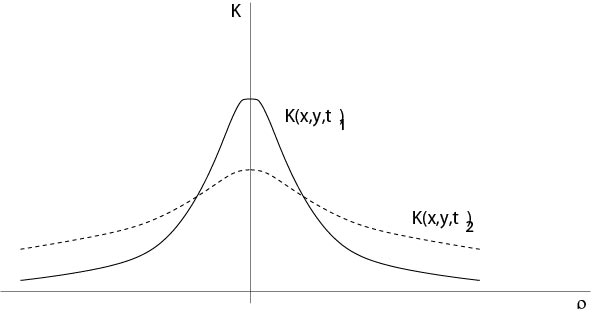
Figure 6.1.1: Kernel \(K(x,y,t)\), \(\rho=|x-y|\), \(t_1<t_2\)
Thus we have
\begin{equation}
\label{poisson1}
u(x,t)=\frac{1}{\left(2\sqrt{\pi t}\right)^n}\int_{\mathbb{R}^n}\ \phi (z)e^{-|x-z|^2/4t}\ dz.
\end{equation}
Definition. Formula (\ref{poisson1}) is called Poisson's formula} and the function \(K\) defined by (\ref{kernel1}) is called heat kernel or fundamental solution of the heat equation.
Proposition 6.1 The kernel \(K\) has following properties:
- (i) \(K(x,y,t)\in C^\infty(\mathbb{R}^n\times\mathbb{R}^n\times\mathbb{R}^1_+)\),
- (ii) \((\partial/\partial t\ -\triangle)K(x,y,t)=0,\ t>0\),
- (iii) \(K(x,y,t)>0,\ t>0\),
- (iv) \(\int_{\mathbb{R}^n}\ K(x,y,t)\ dy=1\), \(x\in\mathbb{R}^n\), \(t>0\)
- \(\delta>0\):(v) For each fixed
$$\lim_{\begin{array}{l}t\to0\\ t>0\end{array}}\int_{\mathbb{R}^n\setminus B_\delta(x)}\ K(x,y,t)\ dy=0$$
uniformly for \(x\in\mathbb{R}\).
Proof. (i) and (iii) are obviously, and (ii) follows from the definition of \(K\). Equations (iv) and (v) hold since
\begin{eqnarray*}
\int_{\mathbb{R}^n\setminus B_\delta(x)}\ K(x,y,t)\ dy&=& \int_{\mathbb{R}^n\setminus B_\delta(x)}\ (4\pi t)^{-n/2}e^{-|x-y|^2/4t}\ dy\\
&=&\pi^{-n/2}\int_{\mathbb{R}^n\setminus B_{\delta/\sqrt{4t}}(0)}e^{-|\eta|^2}\ d\eta
\end{eqnarray*}
by using the substitution \(y=x+(4t)^{1/2}\eta\). For fixed \(\delta>0\) it follows (v) and for \(\delta:=0\) we obtain (iv).
\(\Box\)
Theorem 6.1. Assume \(\phi\in C(\mathbb{R}^n)\) and \(\sup_{\mathbb{R}^n}|\phi(x)|<\infty\). Then \(u(x,t)\) given by Poisson's formula (\ref{poisson1}) is in \(C^{\infty}(\mathbb{R}^n\times\mathbb{R}^1_+)\), continuous on \(\mathbb{R}^n\times[0,\infty)\) and a solution of the initial value problem (6.2), (6.3).
Proof. It remains to show
$$
\lim_{\begin{array}{l}x\to\xi\\
t\to0\end{array}}u(x,t)=\phi(\xi).
\]
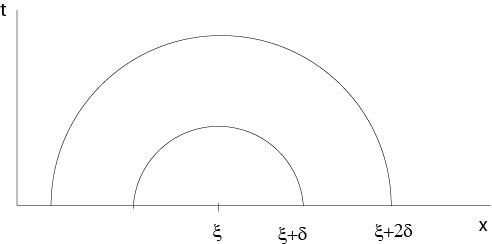
Figure 6.1.2: Figure to the proof of Theorem 6.1
Since \(\phi\) is continuous there exists for given \(\varepsilon>0\) a \(\delta=\delta(\varepsilon)\) such that \(|\phi(y)-\phi(\xi)|<\varepsilon\) if \(|y-\xi|<2\delta\).
Set \(M:=\sup_{\mathbb{R}^n}|\phi(y)|\). Then, see Proposition 6.1,
$$
u(x,t)-\phi(\xi)=\int_{\mathbb{R}^n}\ K(x,y,t)\left(\phi(y)-\phi(\xi)\right)\ dy.
$$
It follows, if \(|x-\xi|<\delta\) and \(t>0\), that
\begin{eqnarray*}
|u(x,t)-\phi(\xi)|&\le&\int_{B_{\delta}(x)}\ K(x,y,t)\left|\phi(y)-\phi(\xi)\right|\ dy\\
&&+\int_{\mathbb{R}^n\setminus B_{\delta}(x)}\ K(x,y,t)\left|\phi(y)-\phi(\xi)\right|\ dy\\
&\le&\int_{B_{2\delta}(x)}\ K(x,y,t)\left|\phi(y)-\phi(\xi)\right|\ dy\\
&&+2M\int_{\mathbb{R}^n\setminus B_{\delta}(x)}\ K(x,y,t)\ dy\\
&\le&\varepsilon\int_{\mathbb{R}^n}\ K(x,y,t)\ dy+2M\int_{\mathbb{R}^n\setminus B_{\delta}(x)}\ K(x,y,t)\ dy\\
&<&2\varepsilon
\end{eqnarray*}
if \(0<t\le t_0\), \(t_0\) sufficiently small.
\(\Box\)
Remarks. 1. Uniqueness follows under the additional growth assumption
$$
|u(x,t)|\le Me^{a|x|^2}\ \ \mbox{in}\ D_T,
$$
where \(M\) and \(a\) are positive constants,
see Proposition 6.2 below.
In the one-dimensional case, one has uniqueness in the class \(u(x,t)\ge 0\) in \(D_T\), see [10], pp. 222.
2. \(u(x,t)\) defined by Poisson's formula depends on all values \(\phi(y)\), \(y\in\mathbb{R}^n\). That means, a perturbation of \(\phi\), even far from a fixed \(x\), has influence to the value \(u(x,t)\). This means that heat travels with infinite speed, in contrast to the experience.
Contributors and Attributions
Integrated by Justin Marshall.